

In the previous post we
added Lucene to Maven, chose an analyzer, and mapped a Track bean to a
search-ready Lucene Document. That is only half the story: you still need
a small class that owns the index — and you should see what “inverted” means
for a token like bob.
Own the index lifecycle
Wrap Lucene’s low-level types in a class dedicated to your bean. Create the
directory and writer, rebuild or mutate, and close everything when the process
shuts down. The playground does the same with an in-memory
ByteBuffersDirectory — plain addDocument(doc), no facet rewrite yet:
// We will use an in-memory index
Directory dir = new ByteBuffersDirectory();

// Create the index writer with the analyzer
IndexWriter writer = new IndexWriter(dir, new IndexWriterConfig(analyzer));

// Create Lucene doc for track #255465792: Ultra Naté - Free (Bob Sinclar Remix)
Document doc255465792 = mapper.toDocument(Tracks.trackFrom(255465792));
writer.addDocument(doc255465792);

// Index track #172523747: Daft Punk - Around The World
Document doc172523747 = mapper.toDocument(Tracks.trackFrom(172523747));
writer.addDocument(doc172523747);

// Index track #106352474: Claude François - Cette année-là
Document doc106352474 = mapper.toDocument(Tracks.trackFrom(106352474));
writer.addDocument(doc106352474);

// Commit all the documents that have been indexed so far
writer.commit();
For a full library, wipe and reload under one write lock:
public void rebuild(List<Track> tracks) throws IOException {
    synchronized (writeLock) {
        writer.deleteAll();
        for (Track track : tracks) {
            writer.addDocument(TrackDocumentMapper.toDocument(track));
        }
        writer.commit();
    }
}
ByteBuffersDirectory keeps the whole index in heap — ideal for a local library
rebuilt at process start. Swap in FSDirectory.open(path) if you need
persistence across restarts.
Upsert / delete by id
public void upsert(Track track) throws IOException {
    synchronized (writeLock) {
        writer.updateDocument(
                new Term(TrackDocumentMapper.ID, track.id()),
                TrackDocumentMapper.toDocument(track));
        writer.commit();
    }
}

public void deleteById(String trackId) throws IOException {
    synchronized (writeLock) {
        writer.deleteDocuments(new Term(TrackDocumentMapper.ID, trackId));
        writer.commit();
    }
}
Close
writer.close();
directory.close(); // order matters — writer first
Serialize mutations with a lock if the index is shared across request threads.
Keep the index warm and consistent
Rebuild once from the source of truth at startup. Prefer upsert / delete by id for single-row edits; full rebuild for bulk operations or when sync fails. Never treat Lucene as authoritative.
Real numbers (~4k tracks)
On a local music library of 4 322 tracks (in-memory ByteBuffersDirectory),
a full rebuild looks like this:
| Metric | Value |
|---|---|
| Documents | 4 322 |
| Wall time | ~400 ms |
| Memory used | ~1.1 MB |
So for a few thousand beans, a full rebuild is cheap enough to run at startup —
and even as a fallback when incremental sync fails. (A suggest dictionary, if
you add one later, sits in its own Directory and adds a little more RAM.)
The inverted index
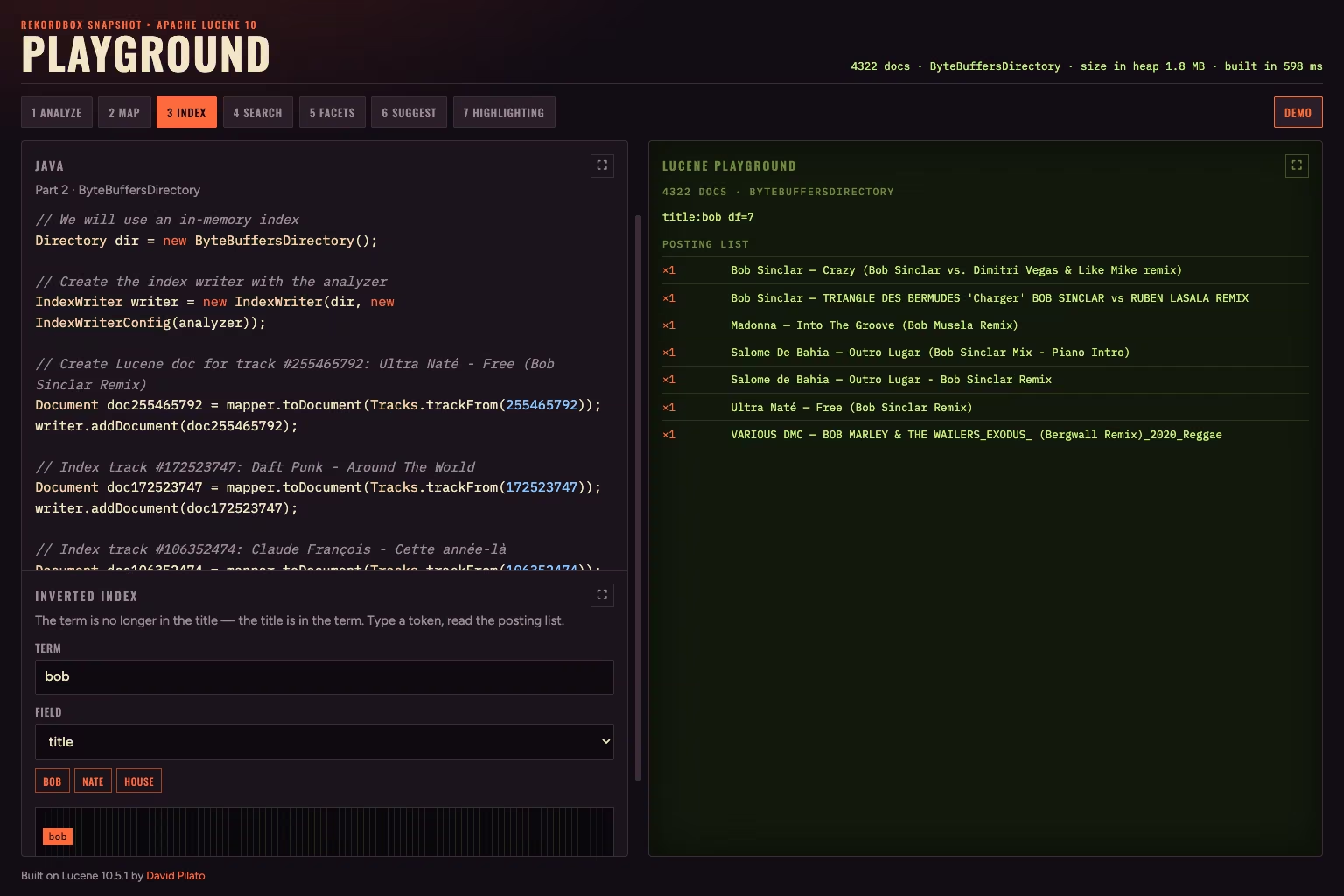
Term bob on field title: posting list of docs that contain that token.
After commit, Lucene does not keep a bag of words on each document. It keeps
an inverted map: term → documents (the posting list). Type bob on title
and you read every track whose title tokenized to bob — including
Free (Bob Sinclar Remix).
Same idea on artist. Six tracks, four distinct names after analysis:
| Docs | Artist (stored) |
|---|---|
| 1, 3 | Bob Sinclar |
| 2 | Bob Marley |
| 4, 5 | Claude François |
| 6 | François Valery |
Lucene does not store that table. It stores the sorted inverted map —
lowercased, ASCII-folded (François → francois):
artist:bob       →  1, 2, 3
artist:claude    →  4, 5
artist:francois  →  4, 5, 6
artist:marley    →  2
artist:sinclar   →  1, 3
artist:valery    →  6
That posting list is what you use when searching. We will talk about this in the next article.
The full demo lives on GitHub: lucene-search-tracks.